
The Driverless Road Ahead
What autonomous vehicles mean for logistics, fleet operators and the future movement of goods.
Driverless vehicles are already operating in defined zones. The logistics sector now needs to understand what happens next.
The sight of a vehicle moving through city traffic with no one at the wheel was, until recently, the stuff of science fiction. In parts of America, it is now simply Tuesday morning.
Waymo — the autonomous vehicle company spun out of Google and now operating under Alphabet — has quietly crossed a threshold that the industry has been working towards for over a decade. People are booking rides, completing journeys, and paying for a transport service with no human driver involved. The technology is no longer being tested. It is being used.
For those working in logistics and transport, that shift matters — even if robotaxis feel distant from the realities of freight, fleet management, and last-mile delivery.
From Experiment to Operation
Waymo began in 2009 as an ambitious question: could a car navigate safely using sensors, mapping, and artificial intelligence alone?
After more than fifteen years of development, that question now has a partial answer playing out on public roads.
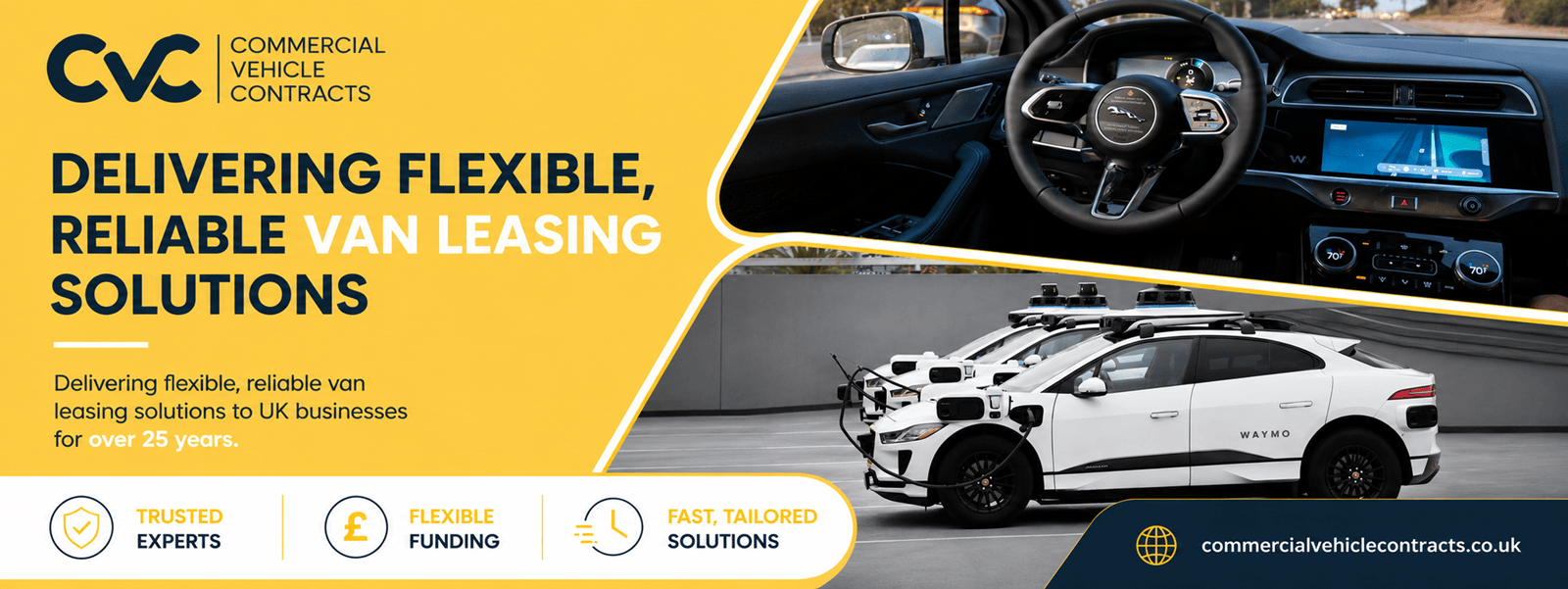
The platform — called Waymo One — allows users to book a driverless vehicle through an app. The cars are fitted with lidar, radar, high-resolution cameras, and onboard AI systems that constantly model the world around them.
Why City Selection Reveals the Limits
Waymo has not expanded everywhere, and its choice of cities explains why.
Phoenix came first — wide roads, predictable layouts, minimal weather disruption. San Francisco followed, more chaotic but heavily mapped and technologically progressive.
London, where Waymo is now conducting mapping trials with commercial deployment targeted for 2026, may become the most important test yet.
The Infrastructure Nobody Talks About
Public discussion of autonomous vehicles focuses heavily on AI. The less visible story is mapping.
Before Waymo launches in any city, months — sometimes years — of road data are collected.
The vehicle is not improvising in real time. It is operating within an environment it already understands in significant detail.
The Business Case — and Its Unanswered Questions
The financial logic behind autonomous vehicles is straightforward in theory. Human drivers represent the highest operational cost in transport.
Remove the driver, and the economics of moving people or goods changes fundamentally.
The reality is more complicated. The hardware required — lidar systems, sensor arrays, onboard computing — remains expensive.
What It Means for Transport and Logistics
The implications for fleet operators and logistics businesses are indirect today, but increasingly important.
Urban delivery patterns, traffic management systems, and city infrastructure could all evolve as autonomy becomes more widespread.
For many fleet operators, the more immediate story is in adjacent technologies already entering the market — advanced sensors, driver assistance systems, and route optimisation platforms.
The Honest Assessment
Autonomous vehicles are not arriving as a sudden disruption. They are arriving gradually — one mapped city, one approved regulation, and one expanding operational zone at a time.
The harder work — scaling across complex cities and resolving the economics at volume — still lies ahead.
But the direction is now set.
About the author
James Nixon writes on transport, logistics and commercial vehicle trends for Commercial Vehicle Contracts.