

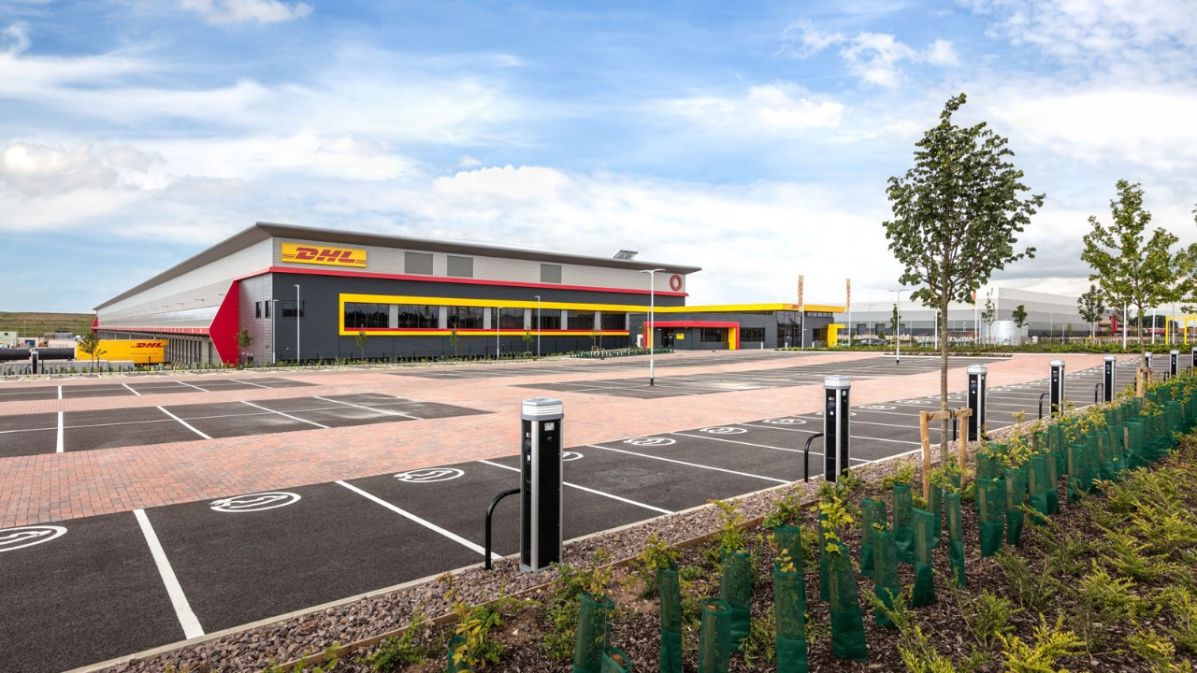
DHL eCommerce’s £230 Million Coventry Hub — What It Means for UK Logistics
The opening of DHL’s state-of-the-art parcel facility near Coventry Airport marks a major moment for UK e-commerce logistics — and raises the bar for the wider sector.
More than a ribbon-cutting, the 25,000m² site represents a major infrastructure investment with implications for capacity, automation, sustainability and customer expectations across the UK parcel market.
A Major Investment in Parcel Infrastructure
When Business Minister Justin Madders officially opened DHL eCommerce’s newest parcel hub in February last year, it signalled far more than a new facility coming online.
The hub at SEGRO Park, south of Coventry Airport, is one of the most significant logistics infrastructure investments seen in the UK in recent years — and a clear indication of where the parcel sector is heading next.
The Scale of the Operation
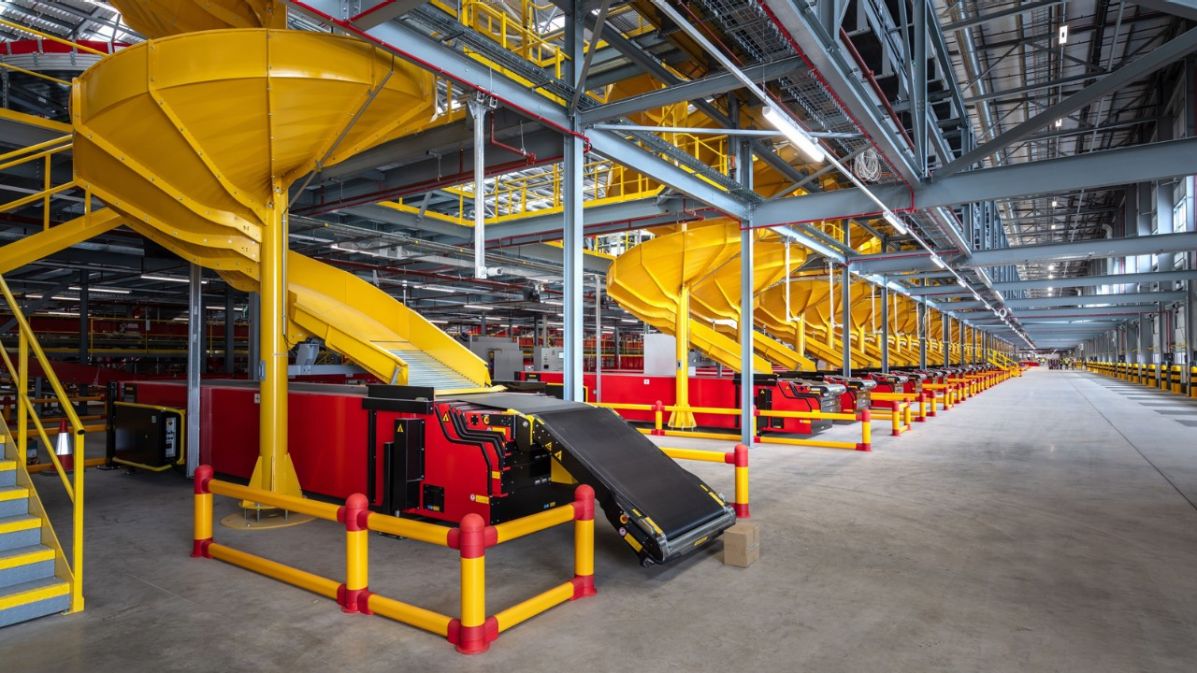
The numbers behind the Coventry hub are striking. The facility is designed to process more than one million parcels per day, supported by a high-speed automated sorting system capable of handling 56,000 parcels per hour.
Operations run across two sorters — the main cross-belt COY sorter stretching 1.5km and a secondary FLY sorter for smaller items. An AI-camera system scans each parcel on arrival, identifying dimensions and characteristics before automatically routing it to the correct sorter.
From Coventry, DHL can reach 90% of the UK population within a four-hour drive — making the site a genuine national logistics hub rather than simply a regional facility.
Strategic location, central UK connectivityBuilt for Capacity and Consistency
The facility runs 24 hours a day, seven days a week, typically staffed by around 350 operatives per shift, rising to 550 during peak periods. It also consolidates operations that were previously spread across multiple regional sites.
24/7 Operation
The site is designed for continuous parcel processing to support high-volume flows and time-sensitive deliveries.
Peak-Ready Workforce
Operational staffing scales up significantly during peak demand periods such as Black Friday and Christmas.
Consolidated Network Efficiency
Bringing multiple operations together improves both efficiency and sustainability across the wider DHL network.
National Reach
Coventry’s location places most of the UK population within rapid reach, strengthening service reliability at scale.
Part of a Much Larger Commitment
The Coventry hub forms part of DHL eCommerce’s wider £482 million UK investment programme announced in 2022.
The site itself includes a 48-door cross-dock facility, secure bonded storage and full customs capabilities — infrastructure that positions DHL to grow international e-commerce volumes as well as domestic parcel throughput.
Why Now — and Why Coventry?
The timing reflects the growth trajectory of UK e-commerce. Revenue is forecast to rise from €152 billion in 2024 to €207 billion by 2029, reinforcing the UK’s position as the largest e-commerce market in Europe.
That scale of growth is placing huge demands on logistics networks to increase capacity, shorten transit times and operate more sustainably at the same time. Coventry, positioned at the heart of England’s motorway network, offers exceptional access for a national parcel operation, while its proximity to Coventry Airport opens further options for international air freight integration.
Sustainability Built In from the Start
The hub has achieved BREEAM “Excellent” status — a strong marker of sustainable design and construction. DHL has incorporated 7,000m² of solar panels, full LED lighting, biodiversity-focused landscaping and 120 EV charging points for both cars and LGVs.
For a logistics operator of DHL’s scale, embedding sustainability into core infrastructure rather than retrofitting it later represents a meaningful operational commitment.
The Coventry investment points clearly towards the future of logistics: higher automation, centralised hub-and-spoke networks, built-in sustainability and a relentless focus on reliable next-day and same-day performance.
What this means for the wider sectorWhat This Means for the Wider Sector
The Coventry hub raises an important question for logistics operators, fleet managers and depot operators across the UK: if major players are investing on this scale, what does that mean for future capacity, competition and customer expectations?
Traffic at the site is split almost equally between B2B and B2C volumes — an unusual balance that helps smooth seasonal peaks and avoid the extreme spikes often seen in more consumer-heavy networks. That balance suggests DHL is positioning Coventry not only as an e-commerce hub, but as a broader commercial logistics asset.
A Clear Signal of Market Direction
For operators and suppliers serving the logistics sector, the Coventry investment offers a strong indicator of where the market is moving: towards greater automation, more centralised distribution models, sustainability built into physical assets, and rising expectations around service performance.
The UK logistics sector is being reshaped in real time, and DHL’s Coventry hub is one of the clearest signs yet of what the next generation of parcel infrastructure looks like.
A Benchmark for the Next Generation of UK Logistics
DHL’s Coventry hub is more than a major infrastructure project — it is a strong signal of how the parcel market is evolving, from automation and scale to sustainability and network resilience.
Visit DHL UK Website