

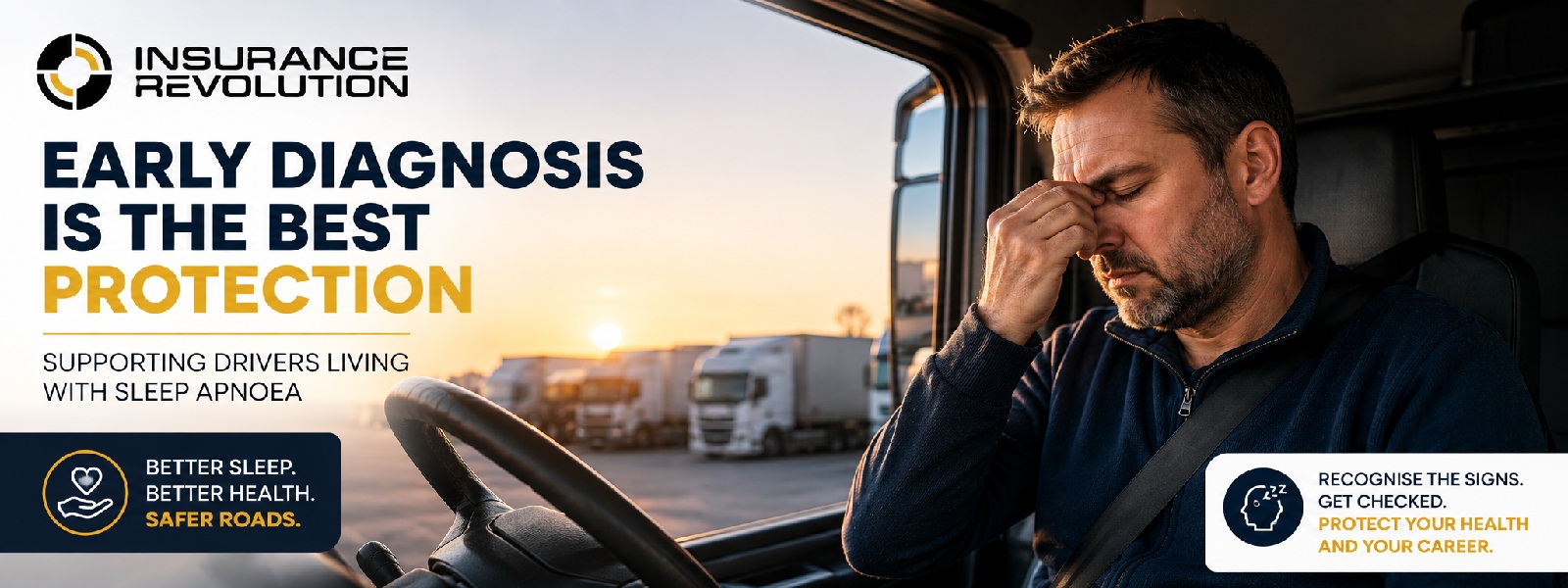
Early Diagnosis Is the Best Protection for Drivers Living with Sleep Apnoea
Sleep apnoea is increasingly recognised as one of the most significant health issues affecting professional drivers. While awareness has improved in recent years, many drivers still avoid seeking medical advice because they fear it could cost them their livelihood.
According to Peter McKenna, that fear remains one of the biggest barriers to improving driver health and road safety.
For many drivers, symptoms develop gradually. Persistent tiredness, loud snoring, interrupted sleep and excessive daytime fatigue can become accepted as simply being part of life on the road. However, untreated sleep apnoea can significantly reduce alertness and concentration, increasing the risk of fatigue-related incidents.
Fear of Losing a Licence Can Prevent Drivers Seeking Help
One of the strongest messages Peter wanted to share is that drivers should not allow concerns about their vocational licence to prevent them from seeking medical support.
That hesitation can have serious consequences.
Drivers who continue working while experiencing excessive daytime sleepiness may unknowingly place themselves, other road users and their employers at greater risk. Left untreated, the condition can affect reaction times, judgement and overall driving performance — particularly during long shifts or overnight operations.
Treatment Often Allows Drivers to Continue Their Career
A common misconception is that a diagnosis of sleep apnoea automatically ends a professional driving career.
Peter says that simply isn’t the case.
Modern treatments, particularly Continuous Positive Airway Pressure therapy, have helped thousands of drivers successfully manage the condition and return to normal daily activities.
Importantly, the focus is on controlling the condition rather than preventing someone from driving.
Managing the Condition — Not Ending a Career
“The DVLA’s approach isn’t simply, ‘You’ve got sleep apnoea, hand in your licence.’ If the condition is properly treated and excessive daytime sleepiness is under control, most drivers can continue driving, subject to the appropriate medical review. It’s about managing the condition — not ending a career.”
That distinction is an important one for both drivers and employers to understand.
Recognising the Warning Signs
Peter encourages any professional driver experiencing ongoing symptoms not to dismiss them.
Signs that should prompt medical advice include:
- Constantly waking up feeling exhausted despite a full night’s sleep.
- Loud or persistent snoring.
- Interrupted breathing during sleep reported by a partner.
- Morning headaches.
- Difficulty concentrating.
- Excessive daytime tiredness.
- Struggling to stay awake while driving.
Faster Support May Be Available
Professional drivers often worry that seeking help will involve lengthy delays or unnecessary disruption to their work.
However, Peter points out that where driving is someone’s livelihood, there can often be faster referral pathways available to help speed up diagnosis and treatment.
The important step is beginning the conversation with a healthcare professional rather than delaying because of uncertainty or fear.
A Safer Industry Through Better Awareness
As highlighted in our recent feature with Insurance Revolution, sleep apnoea is not simply a personal health issue — it is an operational and road safety issue that affects the wider transport industry.
Better education, earlier diagnosis and wider understanding of how the condition is managed can help reduce unnecessary anxiety while ensuring drivers receive the treatment they need.
Ultimately, seeking help early is often the best way to protect both health and career.
For operators, fleet managers and drivers alike, that is perhaps the most important message of all.
Key Takeaways
Editorial note: This article follows our recent feature produced in association with Insurance Revolution exploring sleep apnoea and its impact on professional drivers. Together, both articles reinforce the importance of recognising symptoms early, understanding the support available, and encouraging drivers to seek help without unnecessary fear.