
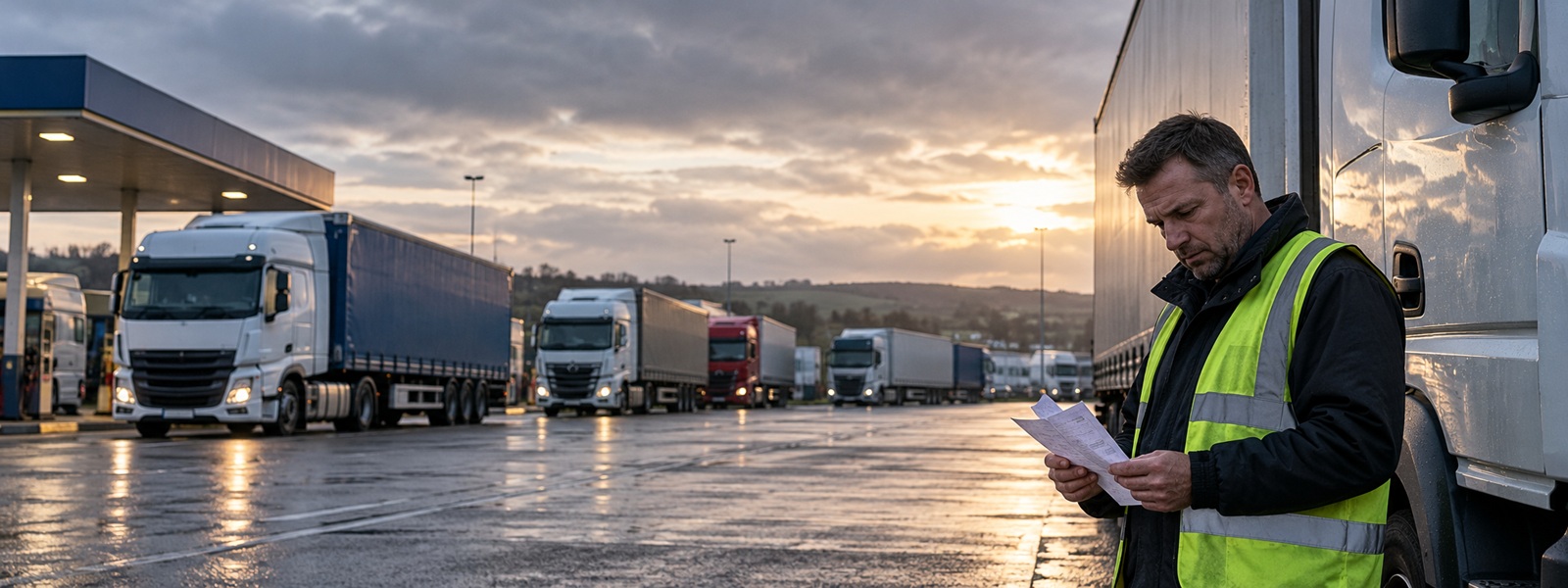
With fuel costs, wages and operating overheads placing pressure on transport businesses, the question is no longer simply how much it costs to move goods — but how long the industry can continue delivering at rates that may not reflect the true cost of the service.
Road haulage is one of the essential foundations of the UK economy. From supermarket shelves and manufacturing plants to construction sites and distribution centres, almost every business depends on commercial vehicles at some point in its supply chain.
Yet behind the daily movement of goods lies an industry facing difficult financial choices.
The cost of operating a modern haulage business extends well beyond diesel. Driver wages, vehicle finance, maintenance, insurance, compliance and fleet replacement all contribute to the overall cost of providing a reliable service.
For operators competing for contracts in a price-sensitive market, recovering these costs is becoming increasingly challenging.
The pressure to keep rates competitive
Transport buyers understandably want value for money. Manufacturers, retailers and wholesalers are themselves managing rising costs and seeking efficiencies throughout their operations.
However, there is a difference between genuine operational efficiency and simply reducing the price paid for a service.
More effective route planning, improved vehicle utilisation, fewer empty miles and reduced waiting times can create meaningful savings.
Continuously pushing down haulage rates without addressing the underlying costs can create longer-term problems.
Businesses operating on narrow margins may struggle to invest in modern vehicles, retain experienced drivers or maintain the flexibility customers expect when demand increases.
The wider supply-chain consequences
For transport customers, the financial health of their logistics providers should be a commercial consideration.
A sustainable haulage relationship is not simply about securing the lowest rate. It is also about confidence that vehicles will be available, deliveries will arrive on time and service standards will remain consistent.
When operators are unable to recover their costs, the consequences can extend beyond the transport sector.
Reduced capacity, service disruption and operator failures can all affect the businesses that depend on reliable distribution.
A different conversation about value
The industry may need to move towards a more transparent conversation about the true cost of transport.
Fuel-adjustment arrangements, collaborative route planning, realistic delivery windows and longer-term contracts could help share risk more fairly between customers and operators.
Technology can support that process by identifying wasted journeys, inefficient scheduling and avoidable costs.
But efficiency improvements alone cannot eliminate every financial pressure.
Ultimately, the question facing the sector is whether customers and haulage operators can develop commercial relationships that remain sustainable for both parties.
The lowest transport price is not necessarily the lowest long-term supply-chain cost.
For British businesses dependent on road freight, understanding that distinction could become increasingly important.